
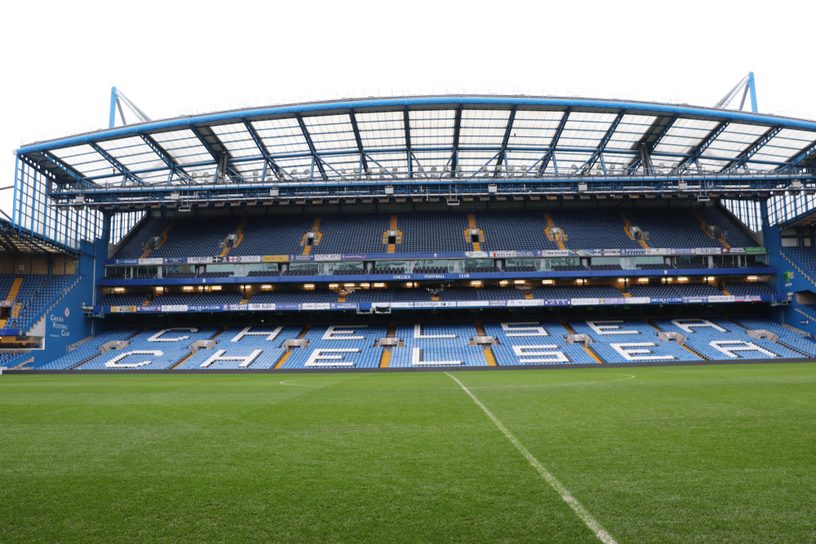
Chelsea’s modern era can be measured in silverware, but the cleaner reading comes from roles. John Terry set the defensive temperature, Frank Lampard changed what a Premier League midfielder could score, Didier Drogba gave the club a final-day striker, Petr Cech turned clean sheets into routine, and Eden Hazard carried the ball when matches became narrow. Chelsea’s official trophy cabinet now includes 2 Champions League titles, the 2025 FIFA Club World Cup, the 2025 UEFA Conference League, and the 2012 win in Munich that still shadows every European night at Stamford Bridge. The five names below do not cover every claim; Ashley Cole, N’Golo Kante, Gianfranco Zola, Claude Makelele, Branislav Ivanovic, and Cesar Azpilicueta all have arguments. This is the modern spine. It also explains why a single league table never captures Chelsea’s last 25 years: the club’s best sides won with low blocks, high full-backs, counterpunching wingers, set-piece pressure, and goalkeeper control.
Terry Made the Box His Office
John Terry was not Chelsea’s fastest defender, and that was never the point. He read the first pass, attacked the first header, and organized the line before the opponent’s No. 10 could turn between midfield and defense. Chelsea’s official profile credits him with 5 FA Cups and 3 League Cups, while his Premier League Hall of Fame case rests on captaincy across the 2004-05, 2005-06, 2009-10, 2014-15, and 2016-17 league titles. A small observation from old Mourinho-era matches: Terry often stepped half a yard toward the near-post zone before the cross arrived, trusting Ricardo Carvalho or, later, Gary Cahill to cover the second contact. He made defending look administrative. In tight matches at Stamford Bridge, that usually meant a first clearance toward the right channel, a reset from Claude Makelele or Michael Essien, and another attack slowed before it began.
Lampard Turned Timing into a Weapon
Frank Lampard’s Chelsea record is still absurd because it belongs to a midfielder, not a No. 9. The club’s all-time scoring list has him at 211 goals in 648 competitive appearances, ahead of Bobby Tambling and Didier Drogba. Lampard’s game ran on repeatable mechanisms: third-man runs, cutbacks from the right, penalty-box rebounds, and late arrivals when the holding midfielder followed the ball instead of the runner. In the 2004-05 title season, his 164 consecutive Premier League appearances for Chelsea told part of the story, but the deeper value lay in availability and end product. The modern Chelsea midfielder is still compared to that standard whenever a season ends with 8 goals rather than 18.
Drogba Owned the Final Minute
Didier Drogba scored 164 goals in 381 Chelsea games, but the number that matters most is still one header at the Allianz Arena on May 19, 2012. Bayern Munich had taken the lead in the Champions League final, Chelsea looked trapped by corners and pressure, and Drogba attacked Juan Mata’s delivery in the 88th minute with the kind of near-post movement he had practiced for years. The later penalty was cleaner than the night itself. A fan reading about an online casino slot during a Champions League archive binge should still see the difference between spectacle and record: Drogba’s case is built on named games, from the 2007 FA Cup final against Manchester United to Bayern in 2012 and the 2009-10 Premier League Golden Boot. The small habit worth remembering is how often he pulled center backs into fouls before the real chance arrived.
Cech Gave Chelsea Quiet Points
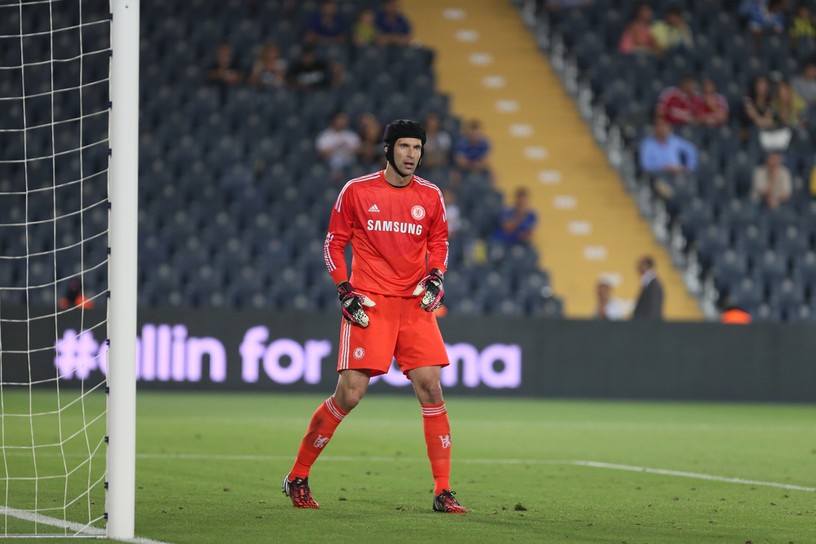
Petr Cech joined Chelsea in 2004 and immediately changed the score to 1-0. His official 2004-05 season is still tied to a Premier League record 24 clean sheets in his first Premier League season, while Chelsea’s title-winning side kept 25 league clean sheets overall and a then-league record run of 1,025 minutes without conceding. That 2004-05 team allowed only 15 goals in 38 league matches, a number that still looks severe in an era of high pressing and open rest-defense structures. A matchday phone now holds ticket apps, group chats, score alerts, and sometimes MelBet apk searches, but Cech’s value came from the opposite feeling: no noise after a cross. He caught rather than punched when bodies crowded the six-yard box, and his starting position often killed the chance before the striker shaped up for the shot.
Hazard Carried the Club Between Systems
Eden Hazard arrived in 2012, left in 2019, and gave Chelsea seven seasons of ball-carrying that did not depend on one coach’s system. Chelsea’s records list him with 110 goals in 352 appearances, and his Premier League peak included the 2014-15 Player of the Season award under Jose Mourinho. The recurring pattern was simple enough to notice from Row Z: Hazard received on the left touchline, let the right back get square, then slipped inside toward the half-space before the second defender arrived. Antonio Conte’s 3-4-3 gave him Pedro, Diego Costa, and wing-back width; Maurizio Sarri’s 4-3-3 asked him to solve slower possession. He solved plenty. Even in poor team performances, his touch count near the left corner of the box often told the story before the shot map did.
The Cut Line is Harsh
Ranking Chelsea legends from the modern era becomes difficult because the club has won across distinct cycles: Mourinho’s 95-point machine in 2004-05, Carlo Ancelotti’s 103-goal league side in 2009-10, Roberto Di Matteo’s Champions League run in 2012, Thomas Tuchel’s 2021 European title, and the post-Abramovich reset that still produced the 2025 Club World Cup. Terry, Lampard, Drogba, Cech, and Hazard survive that cut because each changed a specific match problem. Defender, scorer, closer, goalkeeper, carrier. Five roles. Chelsea has had more decorated squads than the 2018-19 Europa League team and more balanced XIs than the 2021 Champions League side, but few players have left cleaner tactical fingerprints than these five.