
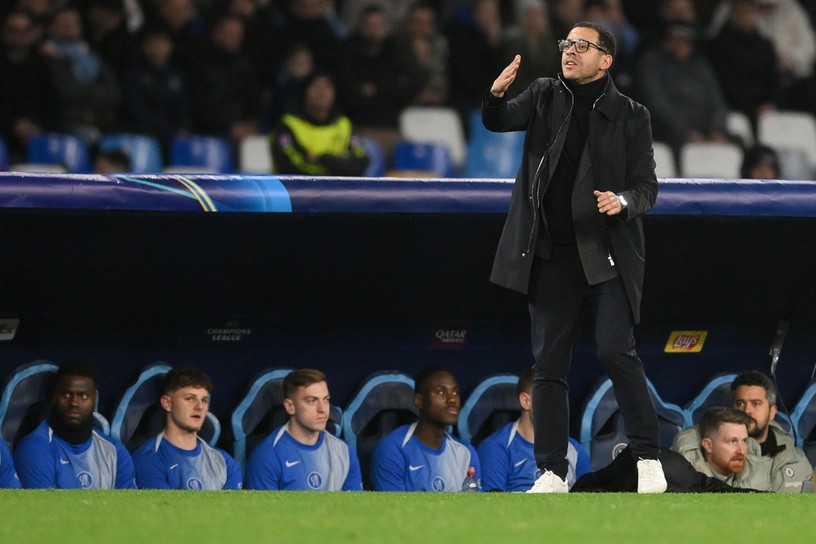
Chelsea have fired more managers mid-season than most clubs fire in a decade. Since Roman Abramovich arrived in 2003, the trigger has been pulled on coaches with trophies still warm, with transfers barely unwrapped, and in at least one case with the league table showing nothing obviously catastrophic.
The Numbers Chelsea Watch Before Pulling the Trigger
No club in Premier League history has made a habit of mid-season changes quite like Chelsea. The pattern is consistent enough that analysts, journalists, and anyone serious about betting online have learned to treat a rough Chelsea December as a reliable early indicator. The axe rarely waits for spring.
What the stats usually show beforehand is not total collapse. It tends to be a combination of factors: a slipping league position, a points-per-game average heading below 1.5, and a sequence of results against teams the manager was supposed to handle comfortably. That combination, more than any single loss, is what the club has historically found intolerable.
Here is what the numbers looked like before each of the major mid-season dismissals:
- Jose Mourinho, December 2015: nine defeats in 16 league games, 16th in the table, one point above the relegation zone, seven months after winning the title by eight points
- Frank Lampard, January 2021: five defeats in eight league games, ninth in the table, despite the club having spent over 220 million pounds on new signings that summer
- Thomas Tuchel, September 2022: sixth in the Premier League table, four points behind Manchester City, sacked the morning after a Champions League loss to Dinamo Zagreb
- Graham Potter, April 2023: 11th in the table, 12 points outside the top four, after 11 defeats in 31 games and more than 550 million pounds spent on players in his eight months in charge
- Enzo Maresca, January 2026: fifth in the Premier League, dismissed after a reported breakdown with ownership rather than any single statistical collapse
What Made the Mourinho Case Different

The 2015 dismissal remains the one that still gets argued about. Mourinho had won the league by a distance the previous May. His overall points-per-game across that second spell at Stamford Bridge was 1.96, which is not a bad manager’s number. But the 2015-16 season produced something genuinely unusual: Chelsea set the record for the worst-ever start to a Premier League title defence at that point, losing nine of their opening 16 games.
Some of those defeats were alarming by any measure:
- A 3-0 loss at Manchester City on the opening day
- A 3-1 defeat at Everton, with Steven Naismith scoring a hat-trick
- Back-to-back losses to Crystal Palace and West Ham within two weeks
- A 2-1 defeat at Leicester City, by that point league leaders, after which Mourinho accused his players of “betrayal”
The atmosphere inside the club turned corrosive quickly. The squad stopped performing. Eden Hazard did not score a league goal until April. The compensation bill for ending Mourinho’s contract came to around 8.3 million pounds, not insignificant for a club that had just paid him to win them a title.
The Tuchel Exception That Proves the Rule
Thomas Tuchel’s dismissal in September 2022 still confuses people, and the confusion is warranted. Chelsea were sixth. They were four points off the top. The manager had a 60 percent win rate across his time at the club, which is a strong number by any comparison.
He had also won the Champions League, the UEFA Super Cup, and the Club World Cup. For context, that is three trophies in under two years. The sacking came on Todd Boehly’s 100th day as owner, the morning after a 1-0 loss in Zagreb.
The underlying issue was not the table. By most accounts it was the relationship between Tuchel and the new ownership, who reportedly found him difficult to work with on transfers. The stats did not tell the real story there, which is what makes it the outlier in this list. Every other mid-season dismissal at Chelsea followed a numbers-based decline. Tuchel’s was something else.
Here is where each sacked manager stood in the Premier League at the moment of dismissal:
- Mourinho (2015): 16th, 15 points from 16 games
- Lampard (2021): 9th, after five defeats in eight games
- Tuchel (2022): 6th, 10 points from six games
- Potter (2023): 11th, 38 points from 31 games
- Maresca (2026): 5th, dismissed by mutual consent
Anyone who tracked these numbers in real time through the Melbet apk would have seen the same thing across most cases: the league position alone rarely told the full story until the final weeks before the call came.
What Consistently Comes Next

Chelsea have rarely improved immediately after a mid-season change. Potter replaced Tuchel and lasted less than seven months. Rosenior replaced Maresca in January 2026 and was gone by spring after a Champions League exit to PSG and five consecutive league defeats.
The club’s points-per-game average under Tuchel was 1.94. In the years after his departure, it dropped to around 1.26. That is not a coaching problem. That is something structural, and no mid-season appointment has fixed it yet.
Xabi Alonso arrived this summer to inherit a squad with Cucurella leaving, Enzo Fernandez’s future uncertain, and a transfer window wide open. The pattern at Chelsea suggests the statistics matter less than the relationship between the manager and the people who write the cheques. That dynamic has ended careers before the numbers gave any warning at all.