
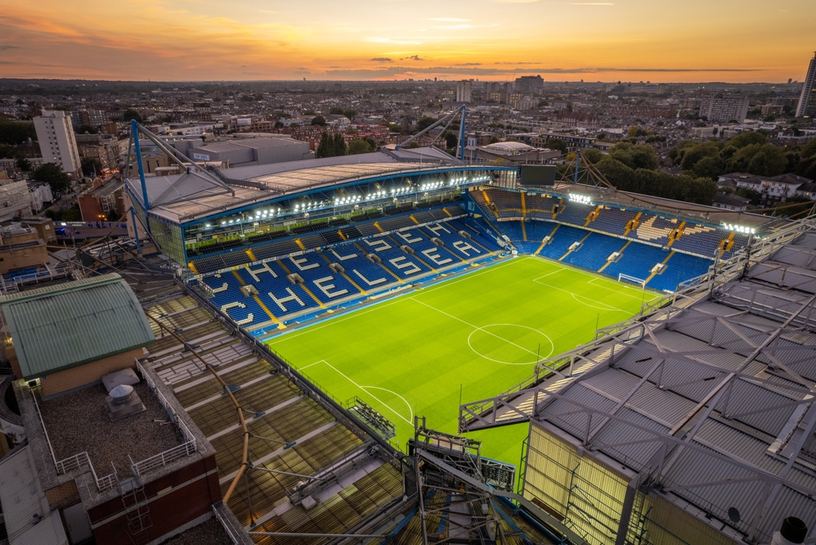
Stamford Bridge opened in 1877 and was first crowned the home of the London Athletic Club, 28 years before the club was founded to fill it.
For most of the 20th century, football actually shared the ground with whatever could fill it. And it seems like a lot of British football clubs are recovering this idea.
Dogs, Bikes and 100,000 Seats
Come and visit London’s Home of Trophies. 🏆
Book your Stadium Tour at Stamford Bridge now. ⭐️⭐️
— Chelsea FC (@ChelseaFC) May 30, 2026
Speedway ran between 1928 and 1932 at Stamford Bridge. This was then followed by greyhound racing from 1933 until 1968, run by the Greyhound Racing Association.
In 1946, the totalisator turnover at Stamford Bridge passed £5 million. The Chelsea Cup and the Produce Stakes gave the track a calendar of its own as well.
During this time, the ground held 100,000 people. The record football attendance was 82,905 against Arsenal in 1935, all while the dog track still circled the pitch.
It’s safe to say that the multi-purpose stadium was generating some serious revenue when it was being used this way.
Why the Question Is Back
Good afternoon from Stamford Bridge. 🥶☀️ pic.twitter.com/Fg7eiSAIrx
— Chelsea FC (@ChelseaFC) January 16, 2024
Capacity today is 41,312, and the owners want more than 60,000. They have said the new ground is the only way to raise the club’s income.
Earls Court, a site less than two miles away, is their preferred location. However, the £10 billion housing scheme there is due to start later in 2026, and the stadium would need its own planning approval.
The club itself bought the 1.9-acre Sir Oswald Stoll Mansions site next door in 2024, which makes the rebuild possible. Either way, the costs are reported to be upwards of £5 billion, meaning the building will have to earn more than 19 league home dates.
One Roof, Many Formats

The lesson from 1933 is that a venue earns considerably more when it stacks formats under one brand.
Tottenham Hotspur Stadium follows this multi-format strategy. Alongside hosting home fixtures, they have NFL games each October, offer stadium tours, and provide a stadium for the Dare Skywalk and an F1 driving experience.
Alexandra Palace, the 150-year-old venue in London, does something similar. Here, they host charity events, concerts, theatre, exhibitions, darts, and an ice rink all under the same Victorian roof.
This strategy can be found in the online entertainment space as well. On most platforms, users can play bingo alongside slots, live dealer games, Slingo, and more. Though digital, users need one login to use many services.
All these examples share one thing in common. These venues (or websites) are used for multiple purposes. This allows them to generate interest from multiple different target audiences and revenue outside their main offering.
What a 60,000-Seat Bridge Would Need
If they decided to go ahead with the new stadium, it may need to be multi-purpose to justify itself. Without question, home fixtures will be the main revenue driver. But what about when the stadium is empty?
When it is, one-off sporting events, year-round hospitality, concerts, and so forth may be required to bring in that extra revenue.