
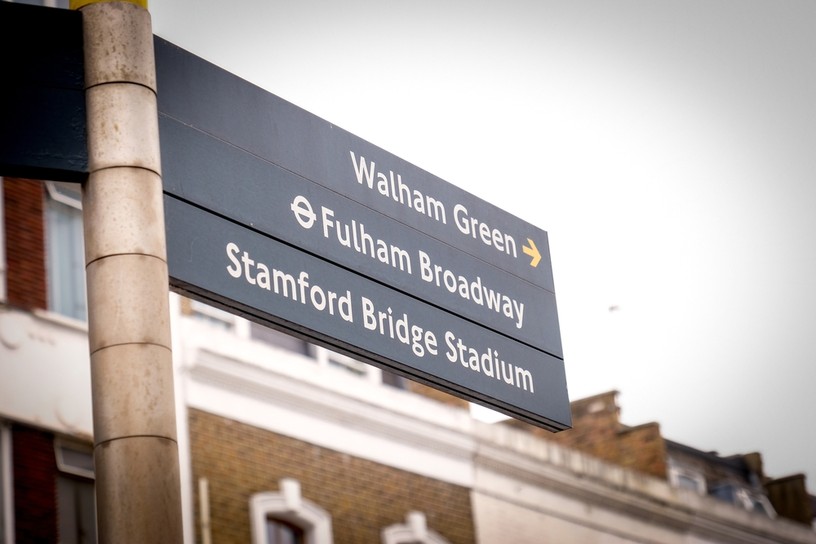
Stamford Bridge sits in a tight corner of south-west London, hemmed in by housing on almost every side, so getting to and from the ground often requires a bit of forward planning. The good news is that it is well connected by public transport, which is by far the easiest way in. Driving, by contrast, is best avoided entirely and on a match day the roads immediately around the stadium are closed off altogether. What follows assumes you are already in London and just need to cover the last leg, but if you’re not, then getting a train to Paddington or Euston is the best place to start.
By Tube
The nearest station to Stamford Bridge is Fulham Broadway, which is on the District line, being roughly a five-minute walk from the turnstiles. The catch is that Fulham Broadway sits on the Wimbledon branch of the London Underground, so you need a Wimbledon-bound District train rather than one heading for Richmond, Ealing Broadway or Kensington (Olympia). From central London, it is quick enough, with Victoria around 15 to 20 minutes away on the District line, but get on a train heading to the wrong place and your journey will become much longer.
The problem is not the journey, but the sheer number of people making it. Fulham Broadway is a small station funnelling a large crowd and in the half hour before kick-off, it gets thoroughly rammed, with queues to get out. After the final whistle, those same queues are there, but this time they’re looking to get back in. Arriving 60 to 90 minutes early is the simplest way to sidestep the worst of it and it also leaves time for a pint on the walk in, if you’re the sort of person that likes to have a drink before you head in to cheer on your football team.
Overground & Other Quieter Routes
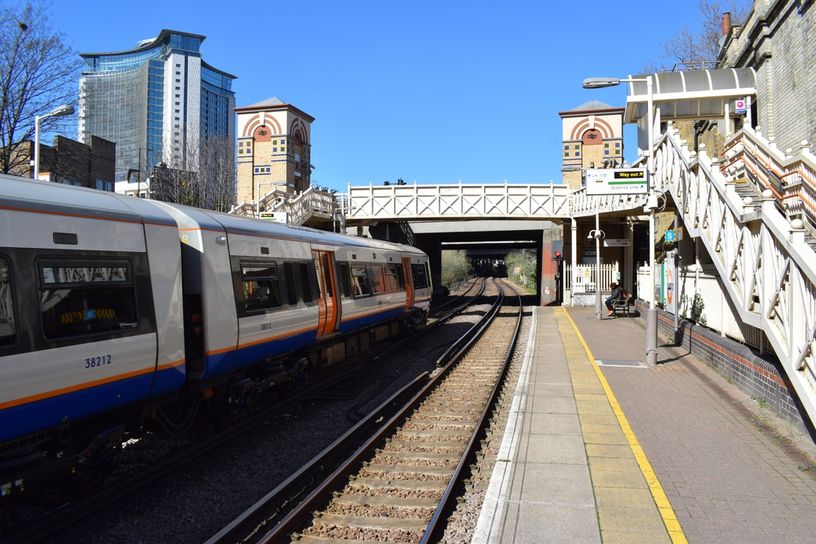
If Fulham Broadway feels too much, there are calmer options a little further out. West Brompton, one stop north on the District line, also sits on the London Overground and is about a 15-minute walk from the ground. That means that you can miss out most of the foot traffic, even if there are likely to be quite a few people having the same idea. Imperial Wharf, meanwhile, is on the Overground to the south. It is a similar distance and often much quieter, so might be the best choice if you want to do what you can to avoid a high number of fellow passengers.
Another option is Earl’s Court, which is one stop away and served by both the District and Piccadilly lines. It is another useful alternative because of that dual-line setup. In fact, it comes into its own after the game, as covered further down. All of this is said with the knowledge that you’re travelling in London, so transport is always likely to be busy even before you add on the foot traffic that comes with a football match. There is no question that it will be busy trying to get to Stamford Bridge whichever way you go, but some routes will be slightly less busy than others.
By Bus
Several London bus routes run along the Fulham Road and stop close to the ground, with the 14, 211 and 414 all passing close to the stadium. Buses are handy for the approach, but worth treating with caution at full-time. That is because the combination of the road closure and the crowds slows everything to a crawl. You might be more comfortable sitting on a bus than walking, if you can get a seat, but that’s never guaranteed. Check live times through the London Underground and bus operator, Transport for London, before setting off.
By Taxi or Car

This is the option that catches most people out. On a match day, the Fulham Road is closed to traffic directly outside the ground, between the junctions with Harwood Road and Hortensia Road, from around 90 minutes before kick-off until roughly an hour after the final whistle. Traffic is diverted along the King’s Road and no vehicles are allowed through, which means a taxi or private car cannot simply drop you off at the stadium during that window. The best you can do is be set down a few streets away and walk the rest, which is better than nothing.
There is an accessible drop-off and pick-up point by the main entrance at Stamford Gate, but the same closure times apply, so it is only usable outside that window. As for leaving a car nearby, the short version is: don’t. The ground has no supporter car park and the surrounding streets fall under resident parking restrictions on match days. The Parking page elsewhere on this site covers just how difficult it is in full, but suffice it to say that anyone looking to park close to the ground is going to have something of a torrid time doing so.
Getting Away Afterwards
The exit is often worse than the arrival when it comes to football matches and Stamford Bridge is no different to anywhere else. Ahead of kick-off, supporters head to the ground from different directions and across a period of a couple of hours. Once the full-time whistle goes, however, tens of thousands of fans head for the exits at the same time, with only a few lucky ones enjoying match day hospitality getting to stay behind. None of which is helped by the fact that there is only one small Underground station for everyone to head to at the same time.
A well-worn trick is to skip Fulham Broadway entirely and walk the 10 to 15 minutes to Earl’s Court, where the platforms are bigger, the lines are more numerous and the queues far shorter. On the biggest fixtures, Chelsea occasionally make Fulham Broadway exit-only or close it for a spell to manage the numbers, so it is worth checking the club’s match day travel information in advance and having a back-up station in mind. There are options, given the sheer number of Tube stations around London, but they aren’t exactly plentiful in that part of the city.