

George Weah remains the only African player to have won the Ballon d’Or, having also been named FIFA World Player of the Year, an honour he claimed in 1995 whilst starring for AC Milan. Five years later, by then in the twilight of his career, he arrived at Stamford Bridge on loan from Milan and spent five months as a Chelsea player, scoring the winner on his debut against Tottenham Hotspur and starting the 2000 FA Cup final. He left to join Manchester City that summer, and later swapped football for politics entirely, as in 2018 he was inaugurated as President of Liberia, the country of his birth.
Who Is George Weah?
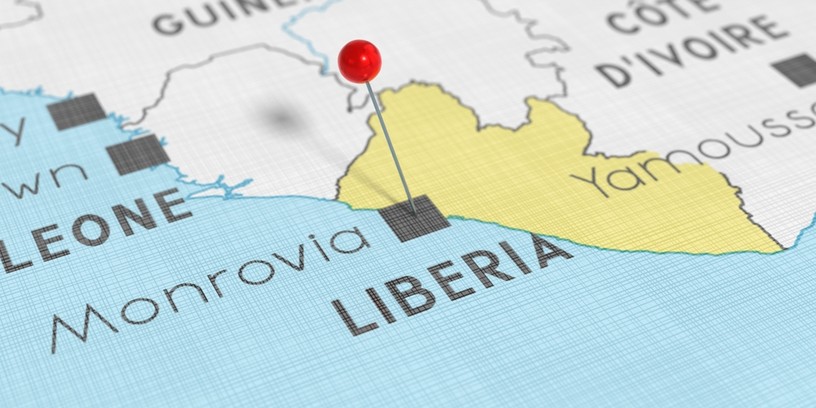
George Manneh Oppong Ousman Weah was born on the first of October 1966 in Monrovia, the capital of Liberia. Raised largely by his grandmother in the Clara Town district of the city, amidst poverty that shaped much of his later charitable and political work, he learned the game barefoot on the streets before rising through a succession of Liberian clubs to become, by the mid-1990s, the finest footballer on the planet.
Weah played for Monaco, Paris Saint-Germain and AC Milan before a short spell in England took in Chelsea and Manchester City. Nicknamed ‘King George’ in recognition of his three African Footballer of the Year awards and his unique world honour, he was voted one of the 100 Greatest Footballers of All Time by World Soccer magazine. After retiring in 2003, he turned to politics in Liberia, eventually serving as the country’s president from 2018 to 2024.
Getting Started as a Footballer
Weah’s footballing education came on Bushrod Island, where he played with homemade rag balls before joining Young Survivors, a Clara Town club, in 1981. Spells with the likes of Bong Range United, Mighty Barrolle and Invincible Eleven followed across the Liberian top-flight during the mid-1980s, and it was at Invincible Eleven that he first announced himself as a genuine goalscoring threat, helping the club to the league title in the 1986-1987 season. His path to Europe ran through Cameroon, where he signed for Tonnerre Yaoundé.
It was there that he was spotted by Arsène Wenger, then managing Monaco. Wenger had asked a friend coaching in Cameroon, Claude Leroy, to look out for a forward and after weeks of positive reports he sent a scout to watch Weah before bringing him to the south of France in 1988. “At the start he was absolutely disastrous,” Wenger later recalled. “Even the players laughed, but he was ready for work. I saw things in him that were amazing, like his physical power, and despite his size he was agile.”
Wenger reshaped Weah physically and tactically over the following months, and the transformation paid off emphatically, with the Liberian scoring 66 goals in four seasons at Monaco and establishing himself as one of French football’s most feared forwards.
Breaking into the First Team
A move to Paris Saint-Germain in 1992 took Weah to the peak of the European game. He helped the Parisians win the Ligue 1 title and the Coupe de France and took the club to the semi-finals of the UEFA Champions League in the 1994-1995 season, where they were eliminated by the club he would join that summer, AC Milan. At the Italian giants, Weah won the Serie A title in 1996 and again in 1999, and produced the goal for which he is still best remembered, which was a solo run against Hellas Verona in the September of 1996.
He collected the ball inside his own penalty area, beat several challenges and finished from the edge of the Verona box to complete a 4-1 win at the San Siro. It is still amongst the most replayed goals in the sport’s highlight reels thanks to his movement, intelligence and unerring finish under pressure. It is the sort of goal that many players dream of scoring, helping Weah to be considered one of the finest strikers of his generation.
It is probably fair to say that 1995 was the defining year of Weah’s career. He was named African Footballer of the Year for the third time, having also won it in 1989 and 1994, and was crowned both European Footballer of the Year, which is the trophy that later became the Ballon d’Or, and FIFA World Player of the Year, becoming the first, and to date only, African to hold either honour. That is a remarkable achievement when you think about the African players that have emerged during that time, such as Mohamed Salah.
The Move to Chelsea

Chelsea manager Gianluca Vialli had spent heavily in the summer of 1999, bringing in Didier Deschamps and Chris Sutton amongst others, but it was a January arrival that most excited those inside Stamford Bridge. Weah, by then 33 and surplus to requirements at Milan, joined Chelsea on loan on the 11th of January 2000, in a deal completed only hours before he was named amongst the substitutes for a home match against Tottenham Hotspur the following evening. Vialli introduced Weah from the bench in the 56th minute of that game, replacing Tore André Flo.
Vialli needed just 31 minutes of him to see the move justified, with Weah rising above Stephen Clemence and Stephen Carr to head home a Dennis Wise cross and settle the game 1-0 with just three minutes left on the clock. “It’s a good beginning,” Weah said afterwards. “I’m hoping to do great things in London and I’m very happy that Gianluca believes in me.” Vialli was similarly pleased, saying, “It’s the best possible start for him and the team. He’s such a great player and he wants to show he’s one of the best strikers in the world and that Milan were wrong to let him go.”
Playing for Chelsea
Weah went on to make 15 appearances for Chelsea in all competitions, scoring five goals, with three coming in the league, including strikes against Wimbledon and Liverpool, as well as two in the FA Cup. He started the 2000 FA Cup final alongside Gianfranco Zola, with Flo held back amongst the substitutes, as Chelsea beat Aston Villa 1-0 courtesy of a Roberto Di Matteo goal. Weah was then replaced late in the match. The final is covered on the FA Cup page.
FA Cup winners at Wembley #OTD in 2000! 🔵 pic.twitter.com/CZGbeFRJnz
— Chelsea FC (@ChelseaFC) May 20, 2025
The occasion carried a personal dimension for Weah. His son, Timothy, had been born in New York only weeks earlier and, unable to bring the newborn to Wembley, Weah instead wore a vest beneath his shirt printed with the message ‘Believe in God, Timothy’, which he revealed during the celebrations. It proved to be his last act as a Chelsea player. Vialli chose not to make the move permanent and that August Weah signed for newly promoted Manchester City on a free transfer.
Weah’s Playing Style
Even in the twilight of his career at Chelsea, Weah retained the attributes that had made him the finest player in the world five years earlier. He had, to use the old cliché, genuine pace for a big man, power in the air, as his winner against Tottenham Hotspur demonstrated, and close control good enough to carry the ball at speed past several defenders, which was the hallmark of his goal against Verona. At Manchester City, teammates who trained alongside him, including goalkeeper Nicky Weaver, spoke of flashes of the class that had earned him the Ballon d’Or even as his legs began to go.
“His finishing was brilliant, that never leaves you,” Weaver said, “but you probably can’t get in the positions like you used to.” What separated Weah from most forwards of his generation was the combination of physicality and technique, making him a target man capable of holding up play and bringing others into it, yet quick and skilled enough to run at defences from deep, as he had shown for Milan and, on a smaller scale, for Chelsea.
Life After Chelsea

Weah’s time at Manchester City was brief and largely unhappy. He scored four goals in nine appearances, including three across two League Cup matches against Gillingham, but grew frustrated at being used as an impact substitute by manager Joe Royle rather than as a regular starter. He left that autumn for Marseille, before a final playing spell at Al Jazira in the United Arab Emirates, retiring from football in 2003 at the age of 37.
Having long been involved in humanitarian work in Liberia, including a spell as a UNICEF goodwill ambassador, Weah entered politics and was elected President of Liberia in 2018. He served a single term, conceding defeat to Joseph Boakai in the November 2023 election and leaving office in the January of 2024, which was only the second peaceful transfer of power in Liberia in more than 70 years.